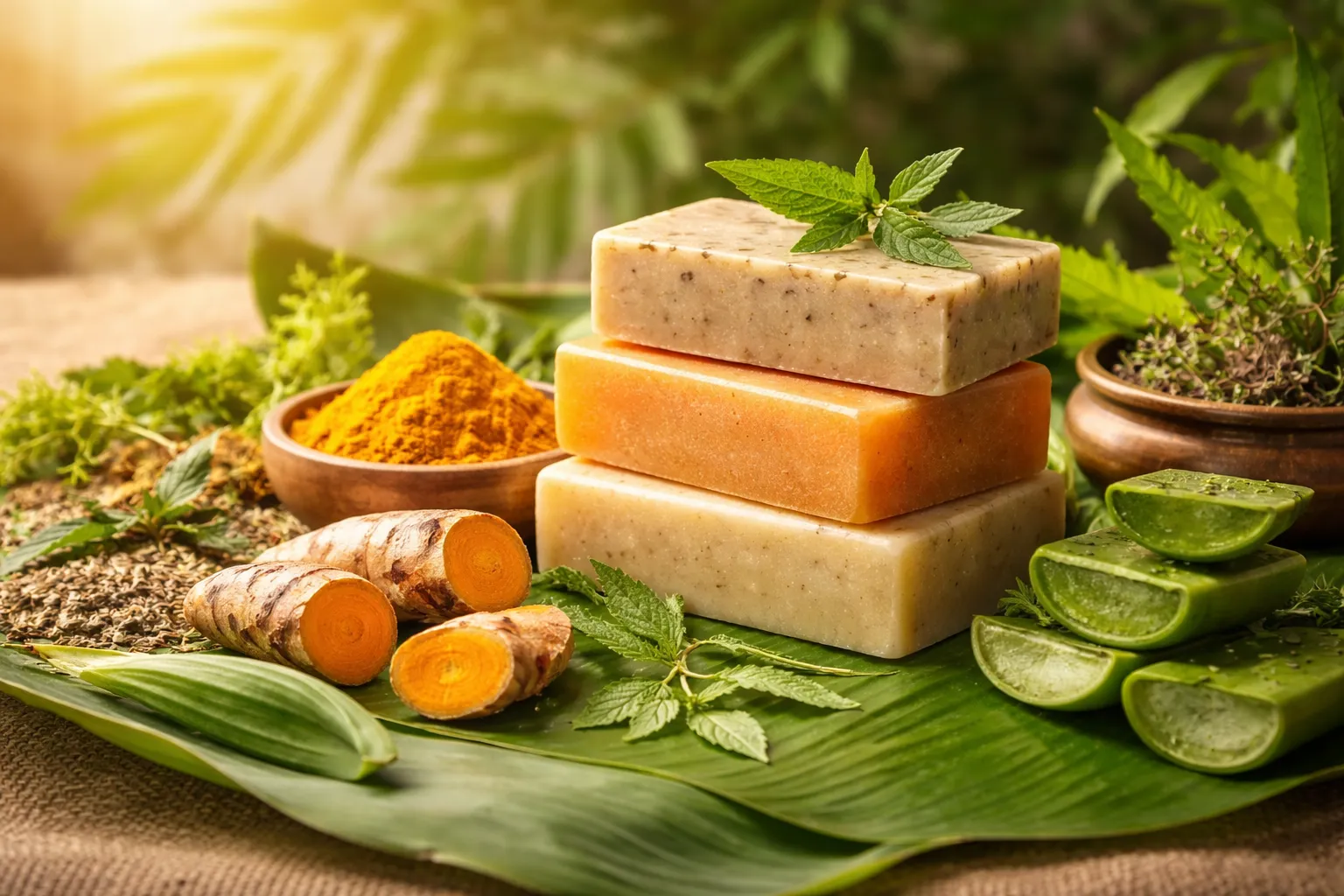


40°C summers in Indore don’t just dehydrate you — they silently strip your skin’s natural oils. Here’s the fix your grandmother already knew.
Every April, Indore residents do something quietly heroic: they walk out of their homes into air that feels like a tandoor oven, go about their day, and somehow survive. But while you’re mentally ticking off your hydration checklist — water bottle, ORS, cold lassi at Sarafa — your skin is quietly losing a battle you don’t even know it’s fighting.
Your skin has a defence system. Scientists call it the skin barrier, or the stratum corneum. Your naani called it “natural skin” — the kind that needed no lotion because it was strong enough on its own. By the time Indore hits 40°C, that barrier starts to fail. And the consequences aren’t just dryness. It’s inflammation, pigmentation, breakouts, a dull complexion that no fairness cream can fix, and hair that becomes brittle and lifeless despite weekly oiling.
This guide is not about expensive routines. It’s not a 12-step programme from a Seoul dermatologist who has never experienced a single afternoon on Vijay Nagar’s AB Road in May. This is the Indore-specific, Ayurveda-backed, written-by-someone-who-understands-our-water-and-our-heat guide to protecting your skin and hair through the most punishing season our city throws at us.
First, What Exactly is Your Skin Barrier — and Why Should an Indore Person Care?
Picture a freshly plastered wall. The plaster is your skin cells. The sealant that holds it all together, waterproofs it, and keeps cracks from appearing — that’s your skin barrier. It’s made of natural lipids (fats), ceramides, and amino acids that your skin produces on its own. It does three things:
What your skin barrier does every second
1. Keeps moisture inside your skin so it doesn’t evaporate.
2. Keeps bacteria, dust, UV radiation, and pollutants outside.
3. Regulates pH — your skin is naturally slightly acidic (pH 4.5–5.5), which keeps bad bacteria from multiplying. Indore’s heat and hard water both disrupt all three functions simultaneously.
Here’s what nobody tells you: sweating doesn’t hydrate your skin — it dries it out. As sweat evaporates from your surface in Indore’s dry April heat, it takes your skin’s natural oils and water with it. This is called Transepidermal Water Loss (TEWL), and it accelerates dramatically above 38°C. You don’t just sweat out water — you sweat out the fats and proteins that hold your skin barrier together.
Add Indore’s hard water — high in calcium and magnesium — and you have a second attacker. Every time you wash your face or shower, the minerals in the water react with the soap residue on your skin to form a chalky, pore-clogging film. Over weeks, this film disrupts your skin’s natural pH, strips its oils, and leaves it perpetually irritated, dull, and prone to breakouts.
In Indore, your skin is fighting a two-front war every summer: heat that evaporates its moisture from the outside, and hard water that strips its oils from every shower. Chemical soaps join hard water to become the third enemy — one your skin didn’t sign up to fight.
And then — just when your skin has adapted to dry heat — the monsoon arrives. Suddenly it’s 85% humidity. Your skin, already depleted of its natural oils, now has to manage excess moisture it can’t regulate. That’s when fungal breakouts, trapped sweat acne, and scalp irritation peak for most Indore residents.
The fix is not more moisturiser. The fix is rebuilding and protecting your skin barrier so it can handle all three seasons that Indore throws at it — from the punishing dry heat of May to the suffocating humidity of July. And the best way to do that is with ingredients that have been designed for exactly this purpose for thousands of years — not synthetic lab substitutes made for European winters.
The Three Things Destroying Your Skin This Summer (You’re Probably Using All Three)
Enemy #1: Your Chemical Soap
The most popular soaps in Indian supermarkets — and we don’t need to name them, you know exactly which ones — use sodium lauryl sulphate (SLS) as their primary surfactant. SLS is the chemical that creates that satisfying, thick foam. It’s also the reason your skin feels “squeaky clean” after washing. That squeaky feeling is not cleanliness — it is your skin’s natural oils being completely stripped. Squeaky skin is barrier-damaged skin.
SLS has a pH of around 9–10. Your skin’s natural pH is 4.5–5.5. Every time you lather up with a conventional soap, you’re smashing your skin’s acidic barrier with something seven to ten times more alkaline. Your skin spends the next few hours trying to restore balance — using up resources it needed for hydration. Repeat twice daily in 40°C heat, and you understand why so many Indore people have skin that feels dry, tight, and irritated year-round despite consuming plenty of water.
Enemy #2: Indore’s Hard Water
If you live in Scheme 54, Vijay Nagar, Rajendra Nagar, or most parts of old city Indore, your municipal water is hard. The calcium and magnesium content is often above 300 mg/L — the upper limit for “moderately hard” water — and in some areas, it exceeds 500 mg/L. When this water mixes with soap on your skin, it creates insoluble calcium and magnesium salts — a chalky film that your skin cannot absorb.
The hard water + chemical soap cycle in Indore
Hard water makes chemical soaps less effective at rinsing clean → you use more soap to feel clean → more SLS strips more oils → skin produces more sebum to compensate → pores clog with excess sebum + mineral film → breakouts begin. You use a harsh face wash to treat the breakouts. The cycle repeats.
Enemy #3: Summer UV + Dust Pollution
Indore’s UV index in May regularly exceeds 10 — the “very high” category. UV radiation doesn’t just tan you; it generates free radicals that break down collagen and damage your skin’s lipid barrier at the molecular level. Pair that with the fine dust particles that hang in the air during dry season — anyone who’s parked their car outside for an afternoon in April knows the coating of chalky dust that forms — and your pores are dealing with both chemical and mechanical assault simultaneously.
| Skin Factor | Chemical Soap + Hard Water | Herbal Soap + Natural Barrier Support |
|---|---|---|
| Skin pH after washing | 9–10 (severely alkaline, damaged) | 5–6 (near-natural, restored quickly) |
| Natural oil retention | Strips 60–80% of surface lipids | Cleanses without stripping; glycerin-rich |
| Hard water reaction | Forms insoluble mineral film on skin | Natural glycerin repels mineral bonding |
| Skin feel after 2 hours | Tight, dry, occasionally itchy | Supple, balanced, comfortable |
| Breakout risk in summer | High — clogged pores + sebum overproduction | Low — pores clear, sebum balanced |
| UV + dust protection | None — barrier already compromised | Antioxidant herbs provide partial natural protection |
The 3-Step Indore Summer Skin Routine That Actually Works
This routine works for two reasons: it repairs the damage that summer causes, and it works with your skin’s biology rather than against it. Every product recommendation below is something that has been used in Madhya Pradesh’s traditional beauty practices for generations — not invented in a laboratory, but refined over centuries of women dealing with this exact climate.
01 Morning: Cleanse Without Stripping — The Ubtan Method
The biggest mistake Indore people make in summer is washing their face aggressively in the morning because they feel oily or sweaty. Your skin produced that oil overnight for a reason — it was trying to repair your barrier. The moment you strip it with a foaming cleanser, you’ve undone 8 hours of your skin’s own recovery work.
The correct morning cleanse is gentle, slightly exfoliating, and pH-balancing. It removes the previous night’s dead cell buildup and environmental dust, without stripping your natural oils. This is precisely what Ubtan — the traditional Indian cleansing formula — was designed to do.
Ubtan Soap — Your Morning Cleanse
Traditional Ubtan contains turmeric (anti-inflammatory, UV-protective), chandan (sandalwood — cooling and astringent), rose (pH-balancing, skin-soothing), and milk proteins (gentle exfoliants that don’t disrupt your barrier).
Unlike a foaming gel, Ubtan cleans by drawing out impurities through mild exfoliation — not by dissolving your skin’s oils. In Indore’s summer, this difference is everything. You step out of your morning shower with skin that’s clean but not stripped — ready to face the heat with its defences intact.
Turmeric Sandalwood Rose Milk Proteins Natural Glycerin
How to use in summer: Wet your face with cool water first (this matters — hot water opens pores and increases water loss; cool water keeps your barrier tight). Work the Ubtan soap into a light lather between your palms and apply to your face in small, circular motions. Leave it on for 30 seconds — let the turmeric and sandalwood do their work. Rinse with cool water. You should not feel “squeaky.” You should feel clean, soft, and slightly dewy. That’s your natural oils, intact.
Indore hard water tip
If you have particularly hard water, keep a small jug of stored/boiled water in your bathroom. Rinsing with it once after your shower makes a visible difference to how clean and soft your skin feels — the mineral film is the culprit, and even one clean-water rinse removes most of it.
02 Evening: Deep Cleanse + Reset — The Moroccan Clay Method
By the time evening arrives in Indore’s summer, your skin has been through a full day of assault: UV radiation, dust particles, sweat, and the constant thermal stress of moving between air-conditioned interiors and 40°C exteriors. That thermal cycling — AC office → hot street → AC car → hot street — is particularly damaging because it causes your pores to repeatedly open and close, trapping debris at every cycle.
Your evening cleanse needs to do something your morning cleanse doesn’t: draw out the accumulated impurities from deep inside your pores, remove the day’s sweat and dust without stripping your barrier, and reset your skin for its overnight repair cycle. This requires clay — specifically, Moroccan red clay (Rhassoul), which has been used for this exact purpose in North Africa’s own desert-hot climate for over 1,400 years.
Moroccan Soap — Your Evening Reset
Our Moroccan Soap uses Rhassoul clay — a naturally occurring mineral clay from the Atlas Mountains with a negative ionic charge. Skin impurities, excess sebum, and dust particles carry a positive charge. The clay acts as a magnet, pulling debris out of pores without the mechanical scrubbing that damages your barrier. Combined with argan oil (rich in Vitamin E and oleic acid — a natural skin-barrier rebuilder), our Moroccan soap cleanses deeply in the evening while simultaneously beginning your skin’s overnight repair process.
Rhassoul Clay Argan Oil Vitamin E Rose Water Lavender
How to use in summer: Your evening wash is slightly more thorough than your morning one. Use lukewarm water (not hot — even in the evening). Lather the Moroccan soap and apply to your face and neck. Allow it to sit for 45–60 seconds. For areas where you notice blackheads or congested pores — typically the nose, chin, and forehead in Indore’s summer — use your fingertips to gently work in circular motions. The clay will draw out the sebum plugs without breaking your skin. Rinse thoroughly. Follow immediately with a small amount of natural hair oil on the ends of your hair if you’ve been in dust all day — this prevents the evening dust from settling on your scalp overnight.
The Science: Why Clay Works in Dry Heat
Rhassoul clay has a silica-to-alumina ratio that makes it uniquely effective at adsorption (not absorption — adsorption means drawing impurities to the surface, not pulling them inward). In dry, hot climates, pores tend to produce more sebum as a protective response — but this sebum traps dust and oxidises in heat, creating comedones (blackheads). Clay’s negative charge attracts oxidised sebum and removes it without the need for harsh detergents, preserving the beneficial lipids your skin actually needs.
Argan oil, meanwhile, is one of the very few oils whose fatty acid profile closely mimics human sebum. Your skin recognises it, accepts it, and uses it to rebuild its barrier lipids — rather than sitting on the surface as an occlusive layer the way mineral oil or petroleum-based moisturisers do.
03 Weekly + Daily: Protect Your Hair and Scalp — The Cold-Pressed Oil Method
Most people in Indore think about their hair in summer the way they think about their car — it needs washing when dirty, and that’s about it. What they don’t account for is that the scalp is skin, and everything your skin barrier goes through in Indore’s summer heat, your scalp goes through too — amplified by hair products, hard water buildup, and the fact that your scalp gets zero UV protection unless you cover it.
The result is scalp skin that’s simultaneously overproducing sebum at the roots (a stress response to heat and chemical shampoos) while being dry and irritated at the base (from the same hard water and UV damage). This produces the signature Indore summer hair problem: oily, itchy roots, dry and breakage-prone lengths, and a scalp that feels tight and uncomfortable by noon.
The traditional solution — weekly oil treatment with cold-pressed, herb-infused oils — is not just cultural ritual. It works, and the science explains exactly why.
Cold-Pressed Herbal Hair Oil — Your Weekly Scalp Repair
Our hair oil is cold-pressed — meaning no heat is used in extraction, so all the active compounds in each herb are preserved at full potency. Bhringraj (the “king of herbs” for hair in Ayurveda) reduces scalp inflammation and promotes follicle health. Coconut oil’s medium-chain fatty acids penetrate the hair shaft — not just coat it — reducing protein loss from washing. Amla (Indian gooseberry) is the highest natural source of Vitamin C, protecting your scalp from UV oxidative damage. Brahmi calms the nervous system’s response to heat stress, which directly reduces stress-related hair fall — a real phenomenon that peaks in April–June for many Indore residents.
Bhringraj Cold-pressed Coconut Amla Brahmi Neem
Friday Night
Deep Scalp Oil Treatment
Warm 2 tbsp of hair oil by placing the bottle in warm (not hot) water for 5 minutes. Part your hair into sections and apply directly to your scalp using fingertips. Massage in slow, circular motions for 5–10 minutes — this stimulates blood flow and helps the oil penetrate follicles. Leave overnight wrapped in a soft cotton dupatta. Do not use a plastic or synthetic cap — it creates excess heat and defeats the purpose.
Saturday Morning
Herbal Shampoo Wash
Use our sulphate-free herbal shampoo to wash the oil out. The key is to apply shampoo directly to your oiled scalp before adding water — this allows the shampoo to bind to the oil and lift it cleanly. Then add water and work into a lather. Two washes if needed. Your hair should feel clean but not “stripped” — slight natural texture is correct. Blow-drying on high heat immediately afterwards undoes the treatment; air-dry or cool setting only.
Daily Tip
2-Drop Daily Protection
On non-wash days, 2 drops of hair oil on the lengths and ends of your hair (not scalp) seals the hair cuticle against Indore’s dry, dusty air. It doesn’t make your hair oily — it makes it smooth. Use your palms to distribute. Think of it as an SPF for your hair shaft: protection that doesn’t show, but prevents the brittleness and split ends that summer sun causes.
The Moment Everyone Gets Wrong: Transitioning from Dry Heat to Monsoon
Every year in Indore, sometime between late June and mid-July, the first monsoon rains arrive. And within two weeks, every second person in Indore has one of the following: a rash under their arms, sudden breakouts on their chin and forehead, an itchy scalp, or dandruff appearing out of nowhere when they’ve never had it before.
This is not a coincidence. It’s a predictable biological event. Your skin has been in drought-protection mode for three months — producing extra oils, tightening pores, conserving every drop of moisture it can. Then suddenly, it’s 85% humidity. The pores it had carefully controlled suddenly face moisture from every direction. The oils it had overproduced to compensate for dry heat now combine with new atmospheric moisture and create a perfect environment for the Malassezia fungus — the cause of dandruff, and for the bacteria that cause breakouts.
The Pre-Monsoon Prep Protocol (Start 2 Weeks Before)
About two weeks before Indore’s monsoon typically arrives (watch the IMD forecast — usually mid-June for the city), begin transitioning your cleansing to the Aloe Vera Neem soap. Neem is a powerful anti-fungal and anti-bacterial that prevents the Malassezia bloom before it starts. Aloe vera’s mucilaginous compounds form a light film on your skin that moderates the sudden swing from dry to humid air. This transition prevents the classic monsoon skin crisis before it begins — not after.
The same logic applies to your hair. Increase oil treatment frequency to twice a week in the pre-monsoon period. The bhringraj in our hair oil has documented anti-fungal properties — it specifically targets the scalp fungal species that bloom when summer heat meets monsoon humidity. People who maintain a consistent oil treatment routine through summer rarely develop monsoon dandruff. Those who start treating it after the dandruff appears spend weeks trying to reverse something that took thirty seconds to prevent.
The Ingredients Your Skin Actually Needs in Indore’s Summer
The following herbs and oils have been used in the Indian subcontinent specifically for summer skin protection. Not for European winters. Not for American air-conditioned office workers. For the specific conditions of hot, dry Indian summers followed by humid monsoons — which means they were developed for people whose climate looks exactly like ours.
🌿Turmeric (Haldi) Curcumin reduces UV-induced inflammation and free radical damage. Inhibits the enzyme tyrosinase — reducing summer pigmentation at its source rather than bleaching it after the fact.
🌺Sandalwood (Chandan) Natural astringent that tightens pores without stripping oils. Cooling properties measured at 3–4°C lower skin temperature in studies. Contains alpha-santalol — a documented anti-inflammatory agent.
🍃Neem Nimbidin and nimbin compounds are potent anti-bacterials that work against the bacteria responsible for summer heat rashes and breakouts. pH-neutral — doesn’t disrupt your skin’s acid mantle.
🌱Aloe VeraPolysaccharide mucilage creates a breathable moisture shield on skin — reducing TEWL (water loss) by up to 20% in hot conditions. Contains malic acid — gentle alpha-hydroxy that removes dead cell buildup without harsh exfoliation.
🫐Amla (Indian Gooseberry)Highest Vitamin C content of any natural source (20x more than orange). Protects scalp from UV oxidative stress. Strengthens hair protein bonds that break down in summer heat.
🌸BhringrajEcliptine alkaloids stimulate hair follicle cells — proven in peer-reviewed studies to extend the anagen (growth) phase of hair. Directly counters summer stress-related hair fall. Anti-fungal properties prevent monsoon dandruff.
🥥Cold-Pressed Coconut Lauric acid penetrates into the hair cortex — not just the surface — reducing protein loss from washing by up to 39% compared to mineral oil (the main ingredient in most commercial hair oils).
✨Argan OilOleic acid profile almost identical to human sebum. Skin accepts it as “native” — uses it to rebuild barrier lipids rather than just coating the surface. Rich in squalene — a natural UV-protectant compound.
What to Stop Using This Summer (Especially in Indore’s Climate)
The fastest way to improve your skin this summer is not to add anything new — it’s to stop doing the things that are actively causing damage. Here is the honest, uncomfortable list:
Stop using alcohol-based toners and astringents. In Indore’s dry summer, these evaporate instantly and take your skin’s natural moisture with them. They were designed for cold, humid climates where pores need to be tightened after exposure to moist air. They have the opposite effect here.
Stop washing your face more than twice a day. Every wash — even with the gentlest product — removes some natural oils. In summer, when your skin is already under pressure, over-washing is one of the primary causes of the rebound oiliness people experience. Your skin produces more oil to compensate for what you strip. The answer is not to wash more — it’s to wash smarter, with the right product.
Stop using heavy creams and petroleum-based moisturisers in summer. These products work by creating an occlusive (non-breathable) layer on your skin. In Indore’s summer, this layer traps sweat, bacteria, and dust beneath it — creating exactly the conditions for breakouts and heat rash. If your skin needs hydration after washing, a thin layer of aloe vera gel or a single drop of argan oil is sufficient. Your barrier, if protected correctly, provides all the sealing it needs.
Stop oiling your hair with refined mineral oil. The most common hair oils sold in supermarkets — including several major Indian brands — use liquid paraffin (mineral oil) as their base. Mineral oil cannot penetrate the hair shaft. It sits on the surface, creating an illusion of shine while doing nothing for the internal structure of your hair. In summer, it also traps heat against your scalp, increasing sweating and creating the itchy, uncomfortable scalp sensation that many people mistake for dandruff.
The difference between a mineral oil-based hair product and a cold-pressed herbal oil is not a matter of philosophy or tradition. It is a measurable, quantifiable difference in whether your hair’s internal protein structure is protected — or merely coated.
Your Complete Indore Summer Skin Calendar — At a Glance
The three-step routine distilled into a weekly format that fits into a real Indore person’s life — before office, after coming home, and once a week:
Your Weekly Routine Summary
Every morning: Ubtan Soap face wash (cool water, 30-second lather, cool rinse). No additional moisturiser needed if barrier is healthy.
Every evening: Moroccan Soap deep cleanse (lukewarm water, 45-second application, thorough rinse). 2 drops of hair oil on ends if hair was exposed to dust or heat.
Once a week (Friday night): Full scalp oil treatment with Herbal Hair Oil. Overnight. Wash out Saturday morning with herbal shampoo.
From mid-June: Begin transitioning your morning wash to Aloe Vera Neem Soap — pre-monsoon protection begins two weeks before the rains.
Your Indore Summer Skin Kit
Everything your skin needs.
Made right here in Indore.
Three products. Three steps. One routine designed for our city’s specific climate, water, and season — not imported from somewhere that’s never seen a May afternoon on Vijay Nagar.
🌾Ubtan Soap
🏺Moroccan Soap
💧Cold-Pressed Hair Oil