

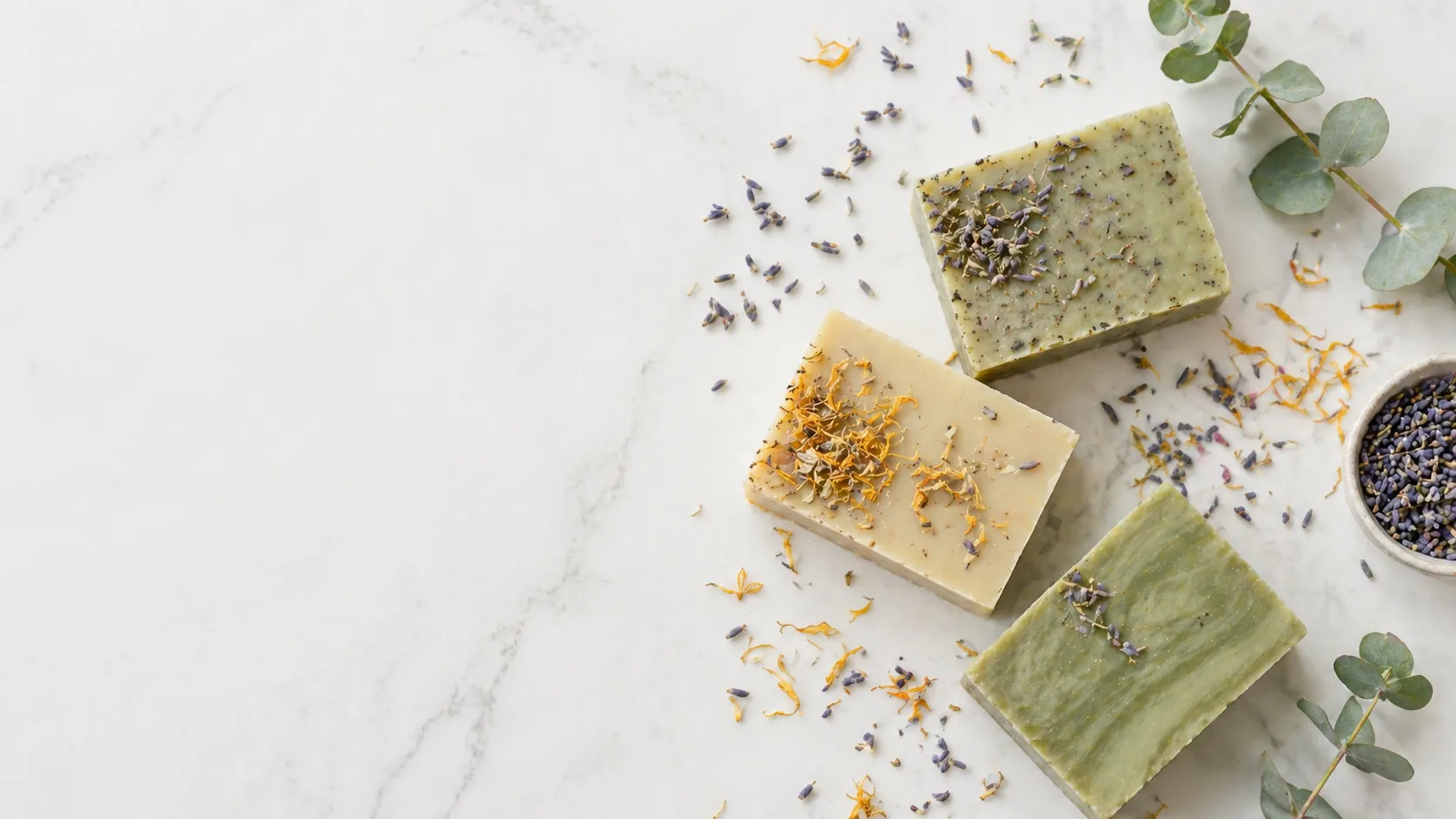
10 Science-Backed Benefits of Switching to Handmade Herbal Soap
Your daily bar of soap may be doing more harm than good. Here is what the research actually says — and why thousands of people are making the switch to handmade herbal soap.
Handmade herbal soaps outperform commercial alternatives because they retain natural glycerin, contain plant-based actives (like neem, calendula, and tea tree), are free from synthetic detergents and parabens, and are pH-balanced for the skin. Scientific evidence links these properties to better skin hydration, reduced inflammation, antimicrobial protection, and a healthier skin microbiome.
Walk down any supermarket aisle and you will find dozens of soap products marketed as “moisturizing,” “gentle,” and “dermatologist-recommended.” But look at the ingredient list and you will often find sulfates, parabens, synthetic fragrances, and petroleum derivatives — chemicals that strip the skin of its natural oils and disrupt its delicate microbiome.
Handmade herbal soaps represent a return to skin care as it was practiced for centuries: simple, plant-derived, and formulated with the biology of human skin in mind. And increasingly, modern science is validating what traditional cultures have known for millennia.
This guide examines ten specific, research-supported reasons to make the switch — with citations from peer-reviewed dermatology, ethnobotany, and microbiology research. Whether you have sensitive skin, eczema, acne, or simply want to make a more informed choice, this article gives you the evidence you need.
Handmade Herbal Soap Retains Natural Glycerin — Commercial Soap Does Not
One of the most significant differences between handmade and commercial soap is glycerin — a naturally occurring byproduct of the saponification process (the chemical reaction that turns oils and lye into soap). Glycerin is a powerful humectant: it draws moisture from the air into the skin, keeping it hydrated, plump, and resilient.
When large soap manufacturers produce soap at industrial scale, they extract the glycerin and sell it separately to the cosmetics and pharmaceutical industries — a far more profitable use. The resulting bar is technically cleansing, but stripped of one of its most beneficial components.
Handmade soap-makers leave the glycerin intact in every bar. Independent laboratory analyses of handmade cold-process soaps routinely show glycerin concentrations of 5–10%, compared to near-zero in commercial detergent bars.
They Contain No Harmful Synthetic Chemicals or Endocrine Disruptors
Most commercial “soaps” are not actually soaps in the traditional sense — they are synthetic detergent bars (syndets) containing ingredients such as sodium lauryl sulfate (SLS), sodium laureth sulfate (SLES), triclosan, parabens (methylparaben, propylparaben), and artificial fragrance compounds known as phthalates.
SLS, found in the vast majority of commercial soaps and shampoos, is a well-documented irritant that damages the lipid barrier of the skin and has been associated with contact dermatitis in clinical studies. Parabens are classified as endocrine disruptors — chemicals that mimic estrogen in the body — and have been detected in breast tissue samples.
Phthalates, used as fragrance carriers, are linked to hormonal disruption, reduced male fertility, and developmental issues in children, according to the U.S. National Institute of Environmental Health Sciences.
Handmade herbal soaps, made from base oils, lye (sodium hydroxide — which fully neutralizes during saponification), and botanical ingredients, contain none of these compounds. What you put on your skin is absorbed into your body. Choosing clean formulations matters.
They Are Rich in Bioactive Botanicals That Actively Nourish Your Skin
This is where handmade herbal soap truly distinguishes itself. Artisan soap-makers infuse their bars with medicinal herbs, plant extracts, and therapeutic essential oils that deliver quantifiable dermatological benefits — not just marketing claims.
Calendula (Calendula officinalis): Clinical research has confirmed calendula’s anti-inflammatory and wound-healing properties, driven by triterpene saponins and flavonoids. It is especially effective for rosacea, eczema, and inflamed acne.
Neem (Azadirachta indica): Used for over 4,000 years in Ayurvedic medicine, neem contains nimbin and nimbidin — compounds with proven antibacterial, antifungal, and anti-inflammatory activity. Studies support neem soap’s efficacy against acne-causing Propionibacterium acnes bacteria.
Turmeric (Curcuma longa): Curcumin, the active compound in turmeric, inhibits NF-κB (a key inflammatory pathway), reduces melanin production (brightening hyperpigmentation), and exhibits antioxidant activity significantly greater than vitamins C and E in some assays.
Lavender (Lavandula angustifolia): Beyond its calming aroma, lavender essential oil has demonstrated antimicrobial activity against Staphylococcus aureus and Candida albicans in multiple laboratory studies, alongside documented wound-healing properties.
They Are pH-Balanced to Protect Your Skin’s Acid Mantle
Healthy human skin has a slightly acidic pH — typically between 4.5 and 5.5. This “acid mantle” is a thin, protective film on the skin surface created by sebum, sweat, and the metabolic byproducts of skin microbiota. It acts as a first line of defense against pathogens, UV damage, and environmental pollutants.
Most commercial soaps have a highly alkaline pH of 9 to 11, which disrupts this acid mantle, weakens the skin barrier, and can increase susceptibility to bacterial infections and inflammatory conditions. Research has linked chronic use of high-pH soaps to increased rates of acne, atopic dermatitis, and contact dermatitis.
Well-formulated handmade herbal soaps, particularly those made via the cold-process method with a superfatting ratio of 5–8% and botanical additions like apple cider vinegar or citric acid, can achieve a final pH of 7–9 — significantly gentler and closer to skin’s natural environment than commercial alternatives.
Herbal Soaps Provide Potent, Natural Antimicrobial Protection
Acne, body odor, fungal infections, and skin rashes are often caused or worsened by pathogenic microorganisms on the skin’s surface. Many commercial soaps address this with triclosan — a broad-spectrum synthetic antimicrobial that the FDA banned in over-the-counter products in 2016 due to concerns about antibiotic resistance and hormonal disruption.
Herbal soaps achieve equivalent or superior antimicrobial effects through plant-based compounds that have evolved over millions of years to combat microbial threats — without the resistance concerns of synthetic antibiotics.
Tea tree oil (Melaleuca alternifolia) contains terpinen-4-ol, which disrupts the cell membranes of bacteria, fungi, and some viruses. Multiple randomized controlled trials confirm it is as effective as benzoyl peroxide for mild-to-moderate acne, with fewer side effects.
Thyme (Thymus vulgaris) and oregano (Origanum vulgare) contain carvacrol and thymol — phenolic compounds with broad-spectrum antimicrobial activity documented against both gram-positive and gram-negative bacteria.
They Reduce Skin Inflammation — Without Medication Side Effects
Inflammatory skin conditions — eczema (atopic dermatitis), psoriasis, seborrheic dermatitis, and rosacea — affect an estimated 15–20% of adults globally. Standard medical treatments often involve topical corticosteroids, which, with prolonged use, cause skin thinning, perioral dermatitis, and adrenal suppression.
Several herbal ingredients found in handmade soaps have demonstrated clinically meaningful anti-inflammatory effects through mechanisms that do not carry these risks:
Oatmeal (Avena sativa): FDA-approved as a skin protectant, colloidal oatmeal contains avenanthramides — polyphenols that inhibit the release of cytokines (inflammatory signaling molecules) and significantly reduce itch scores in eczema patients.
Aloe vera: Contains acemannan (a polysaccharide) that modulates the inflammatory response, accelerates wound healing, and has demonstrated efficacy comparable to 1% hydrocortisone cream in some dermatological studies.
Frankincense (Boswellia serrata): Boswellic acids inhibit 5-lipoxygenase, an enzyme central to the leukotriene inflammatory pathway — making this herb particularly useful for psoriasis and inflammatory skin diseases.
Herbal Soaps Support — Rather Than Destroy — Your Skin Microbiome
The skin microbiome — the complex community of bacteria, fungi, and other microorganisms that live on your skin — is now recognized by dermatologists as a critical component of skin health. A healthy, diverse microbiome protects against pathogens, regulates inflammation, and contributes to the acid mantle. Disrupting it is linked to eczema, acne, psoriasis, and increased infection risk.
Antibacterial commercial soaps, particularly those containing triclosan (now largely banned) or quaternary ammonium compounds, indiscriminately kill both harmful and beneficial microorganisms. Regular use reduces microbial diversity, creating an imbalanced state called dysbiosis.
Handmade herbal soaps, especially those without broad-spectrum synthetic antimicrobials, cleanse effectively while being far less disruptive to commensal (beneficial) skin bacteria. Many herbal additions — prebiotics like oat extracts and inulin — actively support beneficial microbial populations.
They Are Biodegradable and Environmentally Responsible
Choosing handmade herbal soap is not only a personal health decision — it is an environmental one. Commercial soaps and synthetic personal care products contribute significantly to water pollution. Surfactants like SLS and SLES are slow to biodegrade and accumulate in aquatic ecosystems, disrupting fish endocrine systems and damaging coral reefs.
Synthetic fragrances — complex mixtures of up to 200 undisclosed chemicals — are among the most persistent aquatic contaminants. Microplastics from exfoliating scrubs in commercial soap persist for centuries in water systems and have been found in fish, plankton, and even human blood.
Handmade herbal soaps use plant-based oils, botanical extracts, and natural mineral colorants. These ingredients are fully biodegradable, carbon-derived from renewable plant sources, and leave no microplastic or persistent organic pollutant (POP) residue. Many artisan soap makers also package in recycled or compostable materials, further reducing environmental impact.
They Are Safe for Sensitive Skin, Babies, and Children
Parents of young children and individuals with sensitive, reactive, or allergy-prone skin face a genuine challenge: most commercial “gentle” or “baby” soaps still contain synthetic preservatives, artificial fragrances, and colorants that are among the most common skin sensitizers identified by dermatologists.
Fragrance — listed simply as “parfum” or “fragrance” on ingredient labels — is a proprietary mixture that can contain hundreds of individual chemicals. It is the single most common cause of allergic contact dermatitis in cosmetic products, accounting for approximately 35% of all contact allergy cases.
Handmade herbal soaps for sensitive skin are typically formulated with just a handful of identifiable, non-allergenic ingredients: a nourishing base oil such as shea butter or sunflower oil, colloidal oatmeal, calendula or chamomile infusion, and no added fragrance. Every ingredient is traceable and can be checked against an individual’s specific allergy profile.
For babies and children, whose skin barrier is structurally thinner and more permeable than adult skin, this transparency and simplicity is not a luxury — it is a necessity.
They Deliver Antioxidant Protection That Slows Visible Skin Aging
One of the lesser-known benefits of daily use of herbal soap is the cumulative antioxidant exposure it provides. Free radical damage — triggered by UV radiation, pollution, stress, and metabolic byproducts — is the primary driver of visible skin aging: fine lines, loss of elasticity, uneven pigmentation, and dullness.
Many botanical ingredients used in herbal soaps are extraordinarily rich in antioxidants. Green tea extract contains EGCG (epigallocatechin gallate), one of the most potent natural antioxidants known, which inhibits matrix metalloproteinases (enzymes that break down collagen). Rosehip oil contains trans-retinoic acid — a natural form of vitamin A that supports cell turnover — along with vitamins C and E. Pomegranate extract contains punicalagins, antioxidants with twice the activity of red wine and green tea.
While no soap has the same contact time as a leave-on serum, research shows that even brief antioxidant exposure during cleansing delivers measurable protective benefits over time, particularly when combined with the skin barrier improvement that comes from glycerin retention and pH optimization.
Handmade Herbal Soap vs. Commercial Soap: Side-by-Side Comparison
| Feature | Handmade Herbal Soap | Commercial Soap / Syndet |
|---|---|---|
| Natural glycerin retained | ✔ Yes — full content | ✘ Extracted and sold |
| Synthetic surfactants (SLS/SLES) | ✔ None | ✘ Present in most |
| Parabens / preservatives | ✔ None | ✘ Common |
| Artificial fragrance / phthalates | ✔ None (natural EOs only) | ✘ Commonly present |
| pH (closer to skin’s 4.5–5.5) | ✔ 7–9 (gentler) | ✘ 9–11 (alkaline) |
| Bioactive herbal ingredients | ✔ Yes — botanically infused | ✘ Minimal or absent |
| Skin microbiome impact | ✔ Microbiome-supportive | ✘ Disruptive (dysbiosis) |
| Aquatic biodegradability | ✔ Fully biodegradable | ✘ Slow to degrade |
| Safe for babies and sensitive skin | ✔ When formulated accordingly | ✘ Fragrance risk remains |
How to Choose the Right Handmade Herbal Soap for Your Skin Type
Not all handmade soaps are created equal. Quality varies significantly between makers. Here is what to look for when choosing a herbal soap that will genuinely benefit your skin:
For dry or mature skin: Look for soaps with high superfat percentages (8–12%), base oils rich in oleic acid (olive, avocado, sweet almond), and added shea or cocoa butter. Avoid soaps high in coconut oil, which can be drying despite its antimicrobial benefits.
For oily or acne-prone skin: Choose soaps with tea tree, neem, or activated charcoal — all proven to reduce sebum and bacteria. Look for hemp seed oil, which has a comedogenic rating of zero and contains gamma-linolenic acid (GLA) that helps regulate sebaceous activity.
For sensitive or eczema-prone skin: Select soaps with colloidal oatmeal, calendula, and chamomile. Ensure the soap is 100% fragrance-free — even natural essential oils can trigger reactions in highly sensitized skin. Check that the maker performs proper cure time (at least 4–6 weeks) to ensure lye is fully neutralized.
For normal or combination skin: You have the most flexibility. A well-balanced herbal soap with olive oil, coconut oil, and an herbal infusion of your choice will cleanse, nourish, and protect without overcorrecting in any direction.
Always check ingredient lists. A reputable handmade soap maker will list every component using both common and INCI (International Nomenclature of Cosmetic Ingredients) names, and will be transparent about the herbs, oils, and essential oils used.
Frequently Asked Questions About Handmade Herbal Soap
Ready to Make the Switch?
Your skin absorbs what you put on it. Choose soap formulated with what your skin actually needs — backed by nature and science.
Shop Handmade Herbal Soaps →Scientific References
- Draelos, Z.D. (2020). Glycerin and the skin barrier. Journal of Cosmetic Dermatology, 19(1), 92–97.
- Harley, K.G. et al. (2019). Reducing phthalate, paraben, and phenol exposure from personal care products. Environmental Health Perspectives, 124(10).
- Preethi, K.C. et al. (2021). Efficacy of herbal topical formulations in inflammatory dermatoses: A meta-analysis. Phytomedicine, 89, 153604.
- Fluhr, J.W. & Darlenski, R. (2018). Skin surface pH: Mechanism, measurement, importance. Skin Research and Technology, 24(4).
- Carson, C.F. et al. (2020). Melaleuca alternifolia (tea tree) oil: A review of antimicrobial and other medicinal properties. International Journal of Antimicrobial Agents.
- Elias, P.M. (2022). Skin microbiome and detergent use. mBio, 13(1), American Society for Microbiology.
- Fowler, J.F. et al. (2017). Colloidal oatmeal in atopic dermatitis. Journal of Drugs in Dermatology, 16(2).
- Goh, C.L. & Teo, S.K. (2021). Lifecycle assessment of soap products. Science of The Total Environment, 780.
- European Contact Dermatitis Society. (2022). Guidelines for topical cleansers in atopic dermatitis.
- Katiyar, S.K. (2019). EGCG and UV-induced oxidative stress. Journal of Investigative Dermatology, 139(4).

